Coating System for Warehouses, Factories & Industrial Buildings
An industrial building coating system is a layering approach that designs protection for every part of a building as one integrated whole, not for a single surface alone. The system covers walls, floors, and steel structures together, with each part receiving a layer designed specifically for its function. This differs from picking one paint product for one surface. Warehouse and factory paint chosen separately, without treating the building as a single unit, often produces uneven protection: the floor stays durable while the walls break down quickly, or the steel structure is protected while the floor starts to peel.
This article discusses the overall system approach for industrial buildings. We explain why warehouses and factories should be treated as one system, the three critical areas that must be protected, the layer composition of a coating system, the Jotun products commonly used, and the factors that determine system selection. For a more focused discussion, we separate the topic of epoxy flooring in the article Epoxy Floor Paint and corrosion protection for steel structures in the article Anti-Corrosion Coating for Steel Structures. This article ties the two together into one whole.
What Is a Coating System for Industrial Buildings?
Industrial coating is a layering system designed to protect building assets from harsh operational conditions. Unlike decorative painting, which prioritizes appearance, industrial coating prioritizes the protective function: resisting abrasion, preventing corrosion, withstanding chemical exposure, and extending the life of the structure.
What distinguishes a “system” from merely “painting” is the presence of design. An industrial building consists of several substrates with different demands. Concrete floors withstand loads and abrasion. Walls withstand moisture, impact, and dirt. Steel structures withstand rust and weather. Each substrate needs a different layer, but all of them must be designed to support one another and form complete protection.
For this reason, the more accurate term for this need is a coating system, not simply “buying paint.” Product selection is done per area, considering the function of each surface and the exposure conditions around it. This is also the approach used by specifiers and technical teams when designing protection for industrial projects.
Why Warehouses and Factories Need a System Approach
Warehouses and factories face far heavier conditions than ordinary residential or commercial buildings. Mechanical loads, heavy equipment traffic, chemical spills, moisture, and weather exposure act simultaneously on different parts of the building. When only one part is protected, the other parts become weak points that drag down the entire building.
There are three main reasons why the system approach makes more sense for industrial buildings.
First, damage spreads between parts. A peeling floor produces dust that sticks to walls and disrupts equipment. A damp wall encourages mold growth that lowers indoor air quality. A rusted steel structure weakens the frame that supports the roof and walls. The three are interconnected, so fixing one part alone does not fully solve the problem.
Second, maintenance costs are more controllable. When the entire building is protected with a consistent system, maintenance schedules can be planned together and the products used can complement one another. In contrast, patching one part at different times produces greater costs and operational disruption over the long term.
Third, the end result is more measurable. With a system, each surface has a clear specification and can be accounted for. This makes it easier for procurement teams to evaluate offers, compare quality, and build a realistic budget. For guidance on budgeting and project quotation, you can read the artiHow to Calculate Coating Price & Quotationng/).
Three Critical Areas in Industrial Buildings
An industrial building can be simplified into three critical areas, each with different protection demands: walls, floors, and steel structures.
Factory Wall Paint
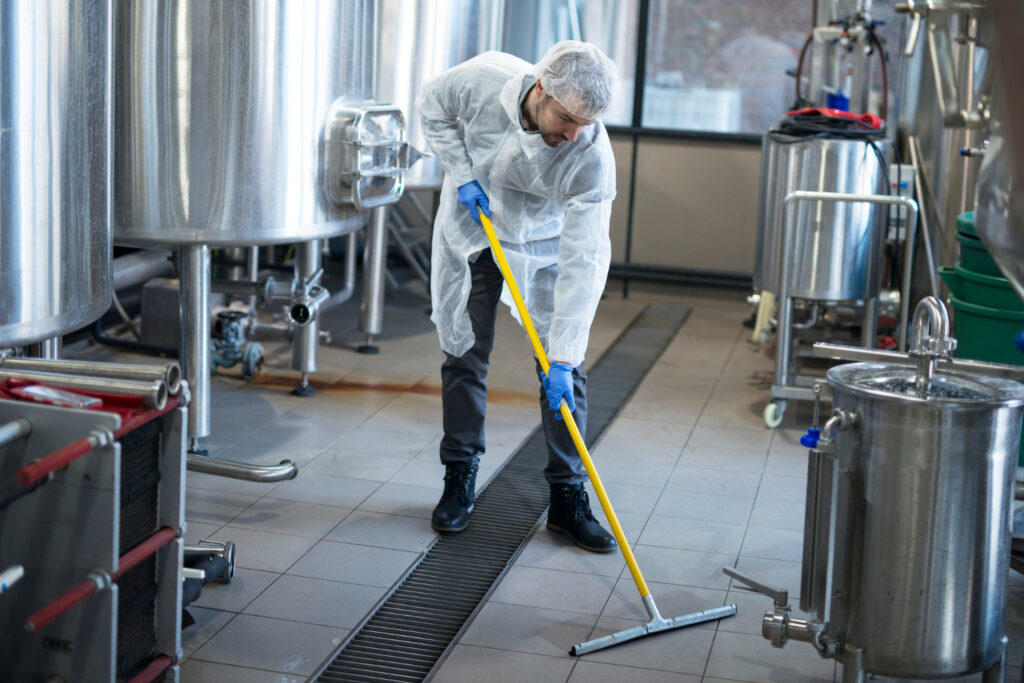
Factory wall paint must answer challenges that differ from house wall paint. Factory walls take impact from moving equipment and goods, are exposed to dust and dirt from production processes, and are vulnerable to moisture from washing areas or processes that produce steam. Walls also act as dividers between areas with different functions, so durability and ease of cleaning become priorities.
For factory walls, product selection considers two main things: resistance to dirt and resistance to moisture. Walls that are easy to clean reduce downtime for maintenance and maintain hygiene standards, especially in the food, pharmaceutical, and electronics industries, which demand high sanitation. Moisture-resistant walls prevent peeling and mold growth in areas frequently exposed to water or steam.
It is worth understanding that factory walls do not always need the same product for the entire area. Production areas, storage areas, and administrative areas have different exposure levels, so the specification should be adjusted per zone.
Warehouse Floor Paint
Warehouse floor paint faces the heaviest loads of all building surfaces. Warehouse floors are crossed by forklifts carrying full loads, bear the static load of tall storage racks, and take continuous abrasion on relatively the same paths. Without protection, concrete wears down, cracks, and produces dust that contaminates goods.
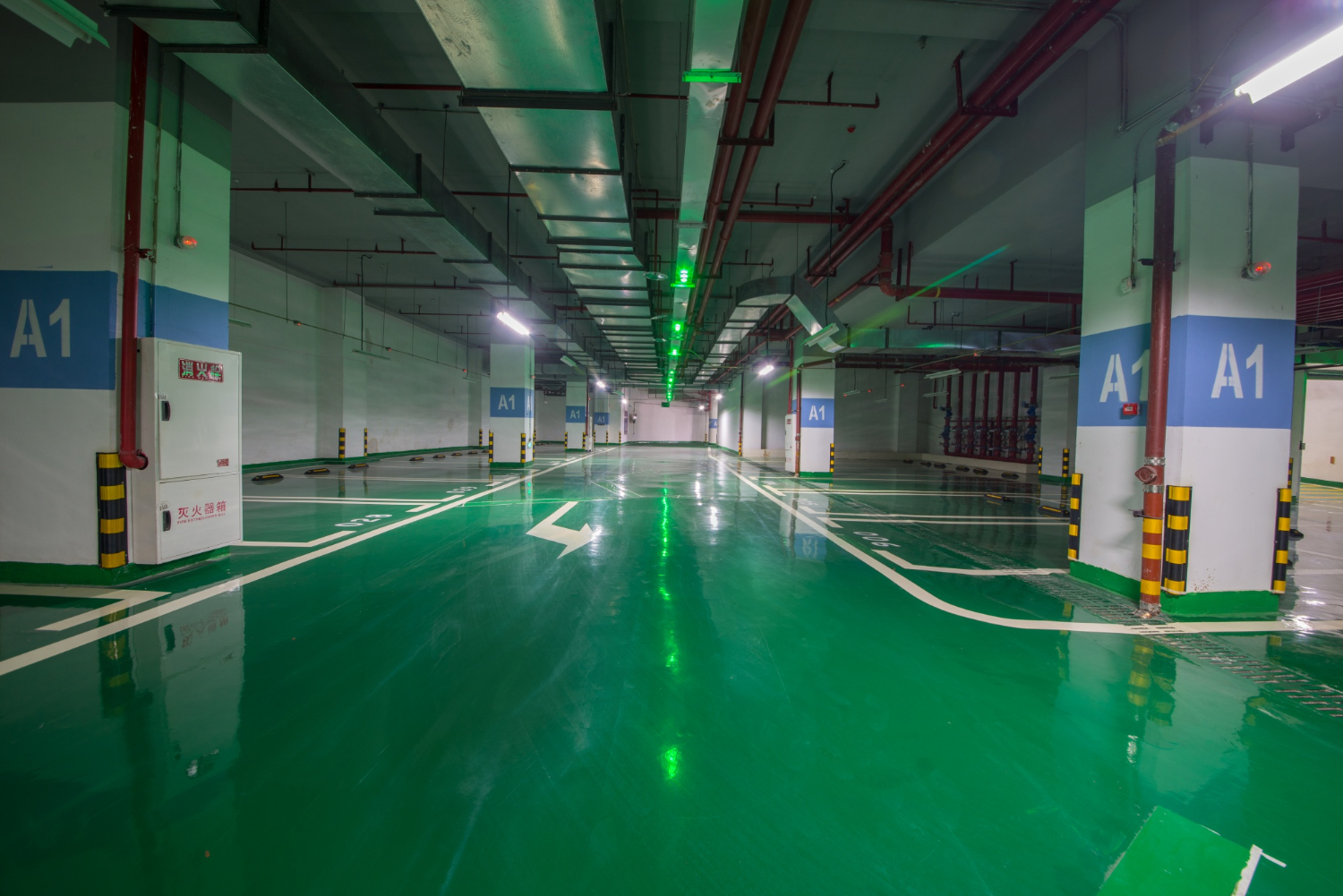
Warehouse floors generally use a layered epoxy system that forms a hard, sealed, abrasion-resistant surface. The priorities are resistance to point loads from forklift wheels and ease of cleaning, since dust and dirt from loading and unloading accumulate quickly. A complete discussion of epoxy systems for warehouse and factory floors can be read in the article Epoxy Floor Paint for Warehouses, Factories & Commercial Areas.
What needs to be emphasized here is its position in the overall system. A floor coated with epoxy correctly protects the concrete, but its value diminishes if the wall above it is damp and drips onto the floor, or if the steel structure above it rusts and flakes fall and dirty the surface. The floor is an important part of the system, not the only part that needs to be considered.
Steel Structure
The steel structure is the frame that supports the entire building, and it is the most vulnerable to corrosion. Steel exposed to humid air, especially in coastal environments like Bali, will rust gradually. Rust does not only damage appearance; it also reduces the thickness of the steel and weakens its structural strength.
Protecting the steel structure requires an anti-corrosion system composed of an anti-rust primer, an intermediate layer, and a topcoat. The priority is preventing contact between the steel and air and moisture, as well as withstanding weather exposure for steel located outdoors. A dedicated discussion of this is available in the article Anti-Corrosion Coating for Steel Structures.
In the system approach, the steel structure must not be forgotten just because it sits at the top and is rarely seen. Damage to the steel structure is the most expensive damage to repair, because it concerns the safety and integrity of the building as a whole.
Layer Composition in an Industrial Coating System
An industrial coating system is almost always composed of several layers that complement one another. Understanding this composition helps you assess whether an offer has met the need or not.
The primer is the first layer that bonds directly to the substrate. Its job is to create a bond between the substrate and the layers above it, as well as to provide basic protection such as anti-rust on steel or pore sealing on concrete. The wrong primer will cause the entire system to fail even if the top layers are expensive.
The intermediate layer is the middle layer that builds the main thickness and strength of the system. This layer absorbs the most load and exposure, so its selection determines how resilient the system is overall.
The topcoat is the final layer that comes into direct contact with the environment. This layer determines the appearance, ease of cleaning, and resistance of the surface to stains, mild chemicals, and weather.
These three layers can be different products for each area of the building. Floors need a penetrating primer and a thick epoxy body coat. Steel structures need an anti-rust primer and a weather-resistant topcoat. Walls need a substrate-appropriate primer and a topcoat that is easy to clean. Designing a system is the work of matching the right layer to each substrate and each exposure condition.
Jotun Products for Industrial Coating Systems
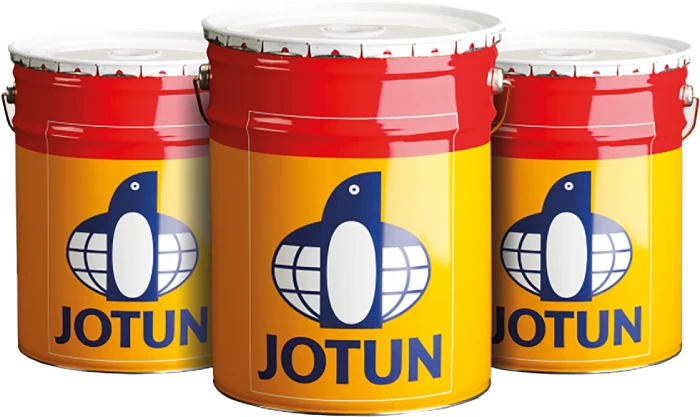
As a Jotun Authorized Dealer in Bali, Elok Jaya Perkasa provides the Jotun products used in industrial building coating systems. Below are the product lines commonly used, along with their roles in the system.
Jotamastic 85 is an epoxy mastic known for its tolerance of imperfect surface preparation. This product is often used in maintenance and repair work, especially on steel and concrete in the field that is difficult to clean thoroughly because of limited access.
Jotamastic 90 is a variant with the ability to build a thicker layer per application. This characteristic is useful when a surface needs significant protective thickness in fewer applications, for example in areas with high corrosion or moisture exposure.
Penguard is a line of epoxy-based primers and intermediates that acts as a base layer and thickness builder. In steel structure systems, Penguard is used to build adhesion and thickness before the topcoat is applied.
Barrier is an epoxy product for environments with more aggressive chemical exposure. This product is often considered for areas that come into contact with chemical spills or corrosive liquids.
Hardtop XP II and Hardtop AX are products in the topcoat line that act as the final layer. Their function is to provide a final appearance as well as surface resistance to weather and the outdoor environment. Topcoats from this line are often used on steel structures exposed to sunlight and moisture.
Product selection cannot be separated from the context of substrate and exposure. The same product can play a different role on floors, walls, or steel, depending on how it is placed in the layer composition. For this reason, product recommendations should be made after the areas and exposure conditions are mapped, not based on product names alone.
Factors That Determine System Selection
No single coating system fits all warehouses and factories. System selection is determined by a combination of several interrelated factors.
The type of operational activity is the first factor. Logistics warehouses, food factories, chemical plants, and heavy workshops each produce different exposures. This type of exposure determines what products are needed in each area.
Environmental conditions are the second factor. Buildings near the coast face a higher risk of corrosion due to salt and air moisture. Buildings at higher elevations face more extreme temperature differences. These environmental factors influence product selection for steel structures and outdoor areas.
The current condition of the substrate also determines the choice. A clean, new surface requires lighter preparation than an old surface that is rusted, oily, or peeling. The heavier the initial condition, the larger the share of surface preparation cost in the overall project.
The desired maintenance cycle also determines the choice. Some managers want a system with a long maintenance interval even if the initial cost is higher, while others prioritize the initial cost. This choice should be calculated by considering the total cost of ownership, not just the initial material price. Complete guidance on budgeting and quotation is available in the artiHow to Calculate Coating Project Price & Quotationng/).
Because these factors are specific to each project, figures or specifications should not be generalized. The right system emerges from actually mapping the conditions and needs of the project.
Frequently Asked Questions
What is the difference between industrial coating and ordinary decorative paint?
Industrial coating is designed to protect surfaces from heavy working conditions such as abrasion, loads, chemicals, and corrosion. Decorative paint prioritizes appearance. For this reason, industrial coating is generally composed of a layered system with primer, intermediate, and topcoat, not a single layer of ordinary wall paint.
Can one product be used for every part of the building?
It is not recommended. Floors, walls, and steel structures have different substrates and exposures, so they need different layers. Floors need a hard epoxy system, walls need a layer that is easy to clean and moisture-resistant, while steel structures need an anti-corrosion system. Using one product for every part actually creates weak points.
What is the correct sequence of work for the whole building?
The common sequence is to work on the steel structure first at the top, then the walls, then the floor. This sequence prevents drips or dirt from work above from damaging surfaces already finished below. However, the final sequence is always adjusted to the conditions and schedule of the project.
Do buildings near the coast need different protection?
Yes. Coastal environments have high salt and air moisture levels, so the risk of corrosion on steel structures is greater. Such buildings generally need a more complete anti-corrosion system, including on steel parts exposed to the outside air.
Do warehouse floors have to use epoxy?
Warehouse floors crossed by forklifts and bearing heavy loads generally need a layered epoxy system to resist abrasion and point loads. However, the exact need depends on the type of traffic and load that actually occurs in the field.
How do I find the right system for my factory?
The most accurate way is to map the areas, substrates, and types of exposure in your factory, then build recommendations based on those conditions. Consulting with a provider that understands coating products and systems helps ensure every area receives appropriate protection.
Project Consultation for Industrial Coating Systems
Choosing warehouse and factory paint is not just a matter of deciding on a brand or color. It is a technical decision about how your entire building will be protected from damage for years to come. A mistake in designing the system, even in just one area, can become a weak point that drags down the maintenance costs of the entire building.
As a Jotun Authorized Dealer in Bali, Elok Jaya Perkasa helps you design a complete coating system for warehouses, factories, and industrial buildings. Our team is ready to review the areas to be protected, map the needs of walls, floors, and steel structures, recommend the right layer composition, and prepare an estimate of material requirements and an official quotation for your project.
Share your project details: type of building, total area, type of operational activity, current surface condition, and project location. Contact Elok Jaya Perkasa for a project consultation, and we will help ensure your industrial building is protected with the correct system from the start, not patched piece by piece later on.
© 2026 Elok Jaya Perkasa, Jotun Authorized Dealer in Bali.