Protective Coating for Coastal Industrial Buildings: Anti-Corrosion Strategy in Humid Tropical Climates
Industrial facilities along coastlines face corrosion challenges that inland factories never encounter. Add the relentless humidity and temperature swings of a tropical climate, and the degradation rate of unprotected steel accelerates beyond what standard specifications anticipate. A warehouse five kilometers inland might show surface rust after three years. The same structure 200 meters from the shoreline can show structural pitting within 12 months.
For plant managers, facility engineers, and asset owners in Bali and coastal Indonesia, this is measured in maintenance downtime, replacement steel costs, and safety risks from compromised structural integrity. The difference between conventional paint and an engineered protective coating coastal specification is the difference between a facility that corrodes on schedule and one that delivers its full design life.
This article provides a technical framework for specifying anti-corrosion tropical coating systems for industrial buildings in humid coastal environments, covering ISO 12944 classification, system design, Jotun product selection, and application methodology. Elok Jaya Perkasa (EJP) is Jotun’s authorized dealer in Denpasar, Bali, supplying the full jotun coating industrial range to facilities across the island.
Why Coastal Industrial Facilities Corrode Faster
The corrosion rate of carbon steel in a coastal tropical environment can be five to ten times higher than in a dry inland location. Three interacting factors drive this acceleration.
Salt spray and chloride deposition. Every breaking wave generates an aerosol of seawater droplets. Onshore winds deposit chloride at rates exceeding 300 milligrams per square meter per day within 500 meters of the shoreline. Chloride ions act as a corrosion catalyst: they break down the passive oxide layer on steel and enable sustained electrochemical attack. Once initiated, the rust layer traps chloride, creating a self-accelerating micro-environment. Read more on coastal corrosion mechanisWhy Anti-Corrosive Paint Is Essential for Bali Beach Villasas/).
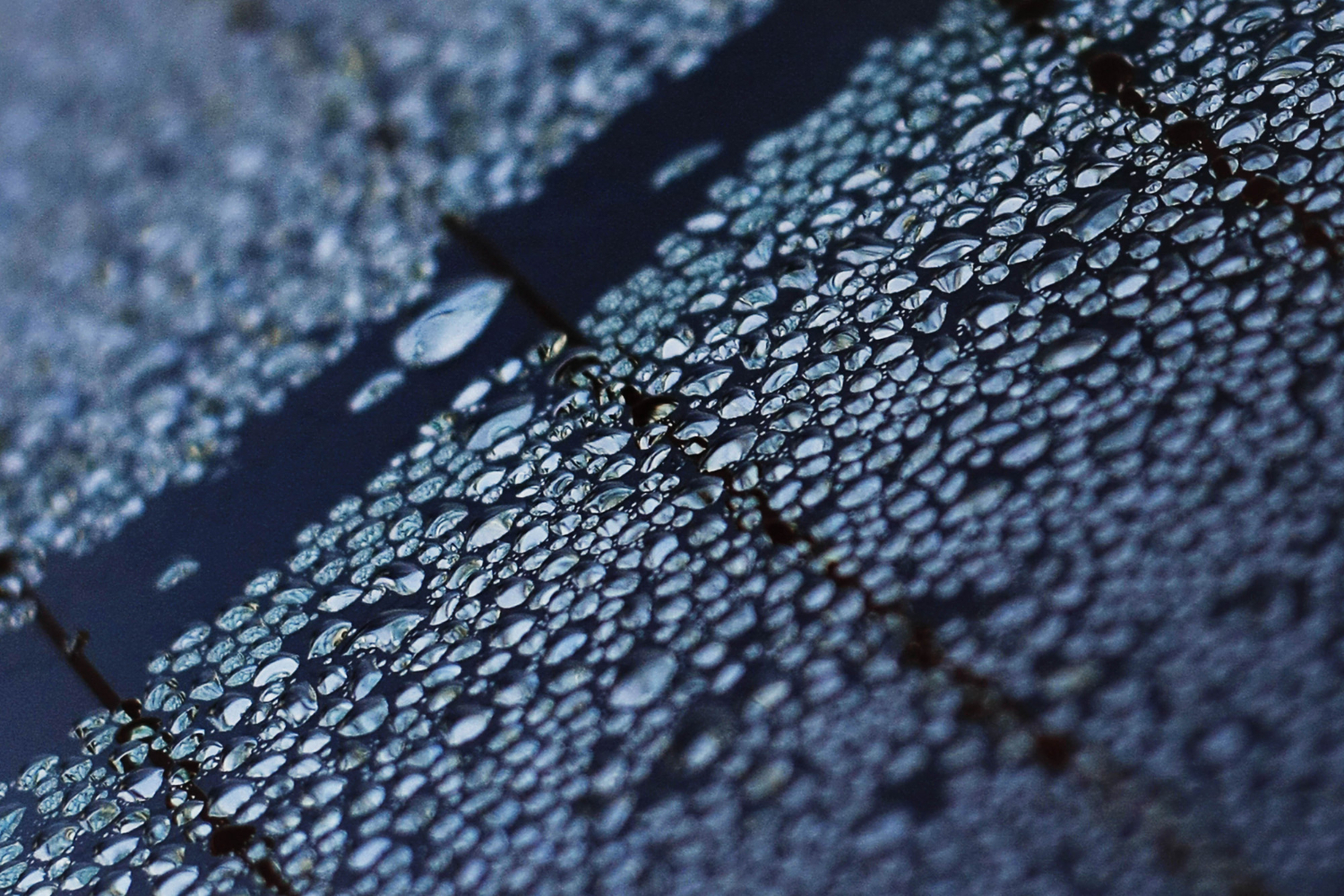
Humidity and condensation. Tropical coastal environments rarely drop below 70 percent RH. Above 80 percent, a thin moisture film condenses on steel, providing the electrolyte for the corrosion cell. Worse, chloride-contaminated surfaces attract moisture at much lower RH: salt-laden steel can be wet at 40 to 50 percent RH, far below the clean-steel condensation point. The practical result is that coastal steel in humid tropics spends dramatically more time wet and actively corroding.
Thermal cycling. A 10-degree daily temperature swing in coastal Bali subjects coating films to repeated expansion and contraction that differs from the steel substrate’s rate. Over thousands of cycles, rigid coatings develop micro-cracks. These become entry points for moisture and chloride, initiating under-film corrosion that spreads beneath apparently intact coating.
Industrial amplification. Process emissions, chemical storage, and high-temperature equipment add corrosive inputs to the coastal baseline. A fish processing plant contends with salt spray plus organic acids. A fertilizer facility faces marine chloride plus ammonium sulfate deposition. These compound effects push the corrosion environment into the highest ISO categories.
ISO 12944 Environmental Categories for Tropical Coastal Zones
ISO 12944-2 classifies atmospheric environments into corrosivity categories (C1 through CX) based on steel mass loss over one year of exposure. Coating system specifications are defined relative to these categories.
C3 (Medium): Urban and industrial atmospheres with moderate pollution. Applies to fully enclosed, climate-controlled buildings more than one kilometer inland. Carbon steel mass loss: 200 to 400 grams per square meter per year.
C4 (High): Industrial and coastal areas with moderate salinity. This is the minimum classification for any industrial building within five kilometers of a tropical coastline. In Bali, this covers inland factories and warehouses in Denpasar, Badung, and Gianyar. Mass loss: 400 to 650 grams per square meter per year.
C5 (Very High, Industrial): Coastal industrial facilities within two kilometers of the shoreline, particularly those with process emissions or chemical handling. Mass loss: 650 to 1,500 grams per square meter per year.
CX (Extreme): Facilities directly on the shoreline, port infrastructure, and processing plants with combined marine-industrial exposure. Mass loss: 1,500 to 5,500 grams per square meter per year.
Proper categorization requires site-specific assessment: distance from shoreline, prevailing wind direction, annual time of wetness, measured chloride deposition, and on-site industrial pollutants. Most coastal industrial facilities in Bali fall into C4 or C5, with Bukit Peninsula and Benoa Port locations reaching C5 or CX. EJP provides on-site assessment to correctly classify your facility’s environment before specification.
Protective Coating System Design for Steel Structures
An engineered coating system is a layered assembly where each coat performs a specific function. The three-layer model is standard for C4 and above.
Primer: Anti-Corrosive Foundation
The primer bonds to prepared steel and prevents corrosion. For C4/C5 coastal industrial environments:
- Surface-tolerant epoxy primers (Jotun Jotamastic 90): Engineered for mechanically cleaned steel (St 2/St 3) when full blasting is impractical. High-build at 200 to 400 microns DFT in a single coat, damp-surface application capability, and wide overcoating windows. The default maintenance primer for operational facilities.
- Zinc-rich epoxy primers (Jotun Barrier): For new construction with Sa 2.5 blast-cleaned steel. Zinc dust at over 80 percent by weight provides cathodic protection. The foundation of systems targeting 15 to 25 year durability in C5/CX environments.
Intermediate Coat: Barrier Build-Up
The intermediate builds total film thickness, bridges primer-to-topcoat adhesion, and smooths surface profile. Epoxy intermediates (Jotun Penguard or additional Jotamastic coats) are applied at 100 to 200 microns DFT. The barrier effect is non-linear: doubling system thickness can increase time to first corrosion by an order of magnitude while the incremental material cost is modest.
Topcoat: Environmental Shield
The topcoat provides UV resistance, chemical resistance, and appearance. Epoxy primers exposed directly to tropical sun will chalk and erode within months. Topcoat options:
- Polyurethane topcoats (Jotun Hardtop XP II): Excellent gloss retention and UV resistance for 10 to 15 years in tropical conditions. Combines polyurethane flexibility with polysiloxane hardness, suitable for structural steel subject to thermal cycling.
- Polysiloxane topcoats (Jotun Hardtop PS): Near-zero chalking over 15-plus years with superior chemical resistance. Best for rigid structures where maximum durability is required.
For comprehensive anti-corrosive coating guidance, see: Anti-Corrosive Paint Bali: The Ultimate Coastal Protection Guide.
Key Jotun Industrial Products for Coastal Protection
The following products form the backbone of EJP’s industrial specifications in coastal tropical environments.
Jotamastic 90: Surface-Tolerant High-Build Epoxy
The most versatile product in Jotun’s maintenance range and the default primer for industrial maintenance in C4/C5 environments:
- Single-coat capability at 200 to 400 microns DFT, eliminating multiple-coat application time
- Performs on power-tool-prepared steel (St 2/St 3) when abrasive blasting is not feasible
- Formulated to cure on damp surfaces, critical for Bali’s humidity
- Extended overcoating window allowing weeks or months between coats with only light surface cleaning
- Low-temperature cure capability, though rarely the limiting factor in tropical Bali
Jotun Barrier: Zinc-Rich Epoxy Primer
For new construction where steel can be blast-cleaned to Sa 2.5:
- Zinc dust content exceeding 80 percent by weight in the dry film for true cathodic protection
- Thin-film application at 75 to 100 microns as part of a full system
- Compatible with Jotamastic intermediates and Hardtop topcoats
- Target durability: 15 to 25 years to first major maintenance in C5 environments
Hardtop XP II: Premium Industrial Polyurethane Topcoat
- Gloss and color retention two to three times that of conventional polyurethanes under tropical UV
- Hard surface resistant to abrasion, impact, and industrial handling
- Chemical resistance to splash and fumes from common industrial chemicals
- Reliable curing in humid conditions with consistent flow and application characteristics
Hardtop AX provides Jotun’s best gloss and color retention for appearance-critical areas in an isocyanate-free formulation. Hardtop Flexi delivers high elongation for structures with significant thermal movement or vibration.
Jotun Penguard: Epoxy Intermediate Coating
The general-purpose epoxy range used as a build coat between primer and topcoat in multi-layer systems, adding total film thickness and smoothing surface profile. Available in variants optimized for airless spray, brush, or roller application with different curing speeds.
Application Considerations for Humid Tropical Climates
Specifying the right products addresses only half the challenge. Application conditions in coastal tropical environments introduce risks that compromise coating chemistry if not managed.
Surface Preparation
Surface preparation is the most important factor determining performance:
- Abrasive blast cleaning (Sa 2.5): Near-white metal. Required for zinc-rich primer systems on new steel. Provides the surface profile (50 to 75 microns Rz) for optimal epoxy adhesion.
- Power-tool cleaning (St 2/St 3): Mechanical cleaning when blasting is not possible. St 3 (very thorough) is the recommended minimum for industrial maintenance. Acceptable only with surface-tolerant primers like Jotamastic 90, yielding reduced but still substantial durability compared to Sa 2.5.
The common mistake is accepting poor surface preparation while expecting full-system durability. If blasting is impossible, specify a surface-tolerant primer, increase film thickness, and plan for maintenance at six to eight years rather than fifteen.
Dew Point and Humidity
Steel temperature must remain at least 3 degrees Celsius above the dew point throughout application and initial cure. In Bali, early morning RH routinely exceeds 85 percent. Morning application may need delay until steel warms above the dew point, and afternoon application must stop in time for initial cure before evening condensation. A digital psychrometer showing ambient temperature, RH, steel surface temperature, and calculated dew point is essential equipment on any tropical coating project.
Pot Life and Application Windows
Two-component products have limited pot life after mixing. At 32 degrees Celsius, a 2-hour pot life at 23 degrees becomes 30 to 40 minutes. Practical adjustments include smaller mixing batches, more frequent mixing cycles, and crews sized to consume material within the shortened window. Products with extended overcoating windows, such as Jotamastic 90, provide significant scheduling flexibility when coating work must fit around production operations.
Lifetime Cost: Conventional Paint vs. Engineered Coating System
Comparing coatings by upfront cost per square meter is dangerously misleading without accounting for service life.
Consider a coastal industrial steel structure of 2,000 square meters in a C4 environment over a 20-year horizon:
Conventional alkyd system:
- Preparation: St 2 power-tool clean
- System: 80 microns total DFT (alkyd primer plus topcoat)
- Applied cost: IDR 100,000 to 150,000 per square meter
- Service life: 2 to 3 years before rust breakthrough
- Maintenance: 7 to 10 full repaints over 20 years, each cycle requiring more extensive preparation
- Operational disruption: access, containment, and production downtime with every cycle
- Total lifecycle cost: three to four times the initial application cost on an annualized basis
Jotun engineered system (Jotamastic + Hardtop):
- Preparation: St 3 power-tool clean
- System: 350 microns total DFT (Jotamastic 90 epoxy at 250 microns plus Hardtop XP II at 100 microns)
- Applied cost: IDR 280,000 to 400,000 per square meter
- Service life: 10 to 15 years to first major maintenance
- Maintenance: one cosmetic topcoat refresh at year 10 to 12
- Operational disruption: one major application cycle versus seven to ten
- Total lifecycle cost: lower than the conventional approach when access, downtime, and escalating preparation costs are factored in
The engineered system transforms coating from a recurring operational expense into a capital investment with predictable lifecycle costs. The upfront premium is recovered multiple times over through reduced maintenance frequency and extended asset life.
Case Scenarios: Coastal Industrial Facilities
Warehouse Near Benoa Port
A 5,000-square-meter steel-frame warehouse located 400 meters from the port shoreline with open sides and fully exposed steel structure. C5 classification. New construction with blasting access.
Specification: Barrier zinc-rich epoxy (75 microns), Penguard epoxy intermediate (150 microns), Hardtop XP II topcoat (100 microns). Total DFT: 325 microns. Design life: 15 to 20 years. The zinc-rich primer provides cathodic protection at any future damage sites.
Fish Processing Factory Near Sanur Beach
A food processing plant 250 meters from the coastline. C5 to CX classification due to combined marine chloride and organic acid vapors. Dual-spec approach: Barrier (75 microns) plus Penguard (150 microns) plus Hardtop XP II (125 microns, increased for chemical resistance) on blasted new steel. Jotamastic 90 (300 microns) plus Hardtop XP II (125 microns) on maintenance areas where blasting is not feasible. Design life: 15 years for new steel, 8 to 10 years for maintenance areas.
Palm Oil Processing Plant, Coastal Sumatra
A mill and refinery 800 meters inland. C4 to C5. Multi-zone specification: Barrier zinc-rich on storage tanks (blasted), Jotamastic 90 on conveyors and pipe bridges (manual prep), Hardtop XP II on ambient-temperature steel, and Jotatemp 650 epoxy phenolic on elevated-temperature surfaces up to 120 degrees Celsius. Total DFT: 325 to 400 microns depending on zone. Design life: 12 to 15 years for ambient areas, 8 to 10 years for high-temperature areas.
Conclusion: Strategic Asset Protection
Coastal industrial facilities in tropical environments operate under some of the most aggressive corrosion conditions on earth. Salt spray, persistent humidity, thermal cycling, and process-specific chemical exposure combine to attack steel structures at rates that render conventional paint inadequate within a few years. The cost of under-specification is not just premature repainting: it is structural steel replacement, unplanned downtime, safety risks, and an asset that never reaches its designed operational life.
An engineered protective coating system, specified to the correct ISO 12944 category, applied with proper surface preparation and tropical-climate-aware methodology, and built from compatible Jotun products, transforms corrosion protection from an operational headache into a predictable, long-term asset management strategy. The upfront investment is recovered multiple times through reduced maintenance frequency, lower lifecycle cost, and extended facility service life.
Elok Jaya Perkasa supplies the full Jotun industrial protective coating range in Bali: Jotamastic surface-tolerant epoxies, Barrier zinc-rich primers, Penguard epoxy intermediates, Hardtop polyurethane and polysiloxane topcoats, and specialty coatings for high-temperature and chemical-resistant applications. We provide on-site environmental assessment, written coating specifications, product supply from our Denpasar warehouse, and technical support throughout application.
Contact Elok Jaya Perkasa for your industrial protective coating requirements. Whether building a new coastal facility, planning a major maintenance campaign, or troubleshooting premature coating failure, our technical team can help. Reach our Denpasar office to schedule an on-site assessment and receive a written coating specification tailored to your facility and operational constraints.