Protective Coating vs Ordinary Paint: What’s the Difference?
When planning a construction, renovation, or industrial project, choosing the right coating system is just as important as selecting the right building materials. However, many people assume that protective coating and ordinary paint are essentially the same product with different names.
While both are applied to surfaces and can improve appearance, they are designed to serve very different purposes.
Ordinary paint is primarily intended to add colour and enhance aesthetics. Protective coating, on the other hand, is engineered to protect valuable assets against corrosion, chemicals, abrasion, moisture, and other harsh environmental conditions.
Understanding the difference can help you avoid premature coating failure, reduce long-term maintenance costs, and extend the lifespan of your assets.
Purpose: Protection vs Appearance
The most significant difference between protective coating and ordinary paint lies in what they are designed to achieve.
Ordinary decorative paint is formulated to improve the appearance of interior and exterior surfaces. It provides colour, texture, and a clean finish for homes, offices, hotels, and commercial buildings. While many decorative paints offer basic resistance to weather and moisture, their primary purpose is visual enhancement rather than structural protection.
Protective coatings, by contrast, are designed to act as a barrier between the substrate and the surrounding environment. Their role is to protect steel, concrete, and other materials from factors that can cause deterioration over time.
For industries where equipment and structures represent major investments, protection is often more important than appearance. Corrosion, chemical attack, and abrasion can significantly reduce the service life of an asset if the wrong coating system is used.
Built for Harsh Environments
One of the biggest advantages of protective coatings is their ability to perform in environments where ordinary paint would quickly fail.
Industrial facilities, marine structures, bridges, warehouses, parking buildings, and coastal properties are constantly exposed to challenging conditions such as:
- Saltwater and sea spray
- High humidity
- Intense UV radiation
- Heavy rainfall
- Chemical exposure
- Mechanical abrasion
- Frequent cleaning
- Heavy vehicle or pedestrian traffic
In coastal regions like Bali, these environmental conditions are particularly aggressive. Salt particles carried by the sea breeze can settle on exposed steel surfaces every day. Combined with high humidity and tropical temperatures, this creates an ideal environment for corrosion.
A decorative paint system may initially look attractive, but it is generally not formulated to withstand these demanding conditions for extended periods.
How Protective Coatings Work
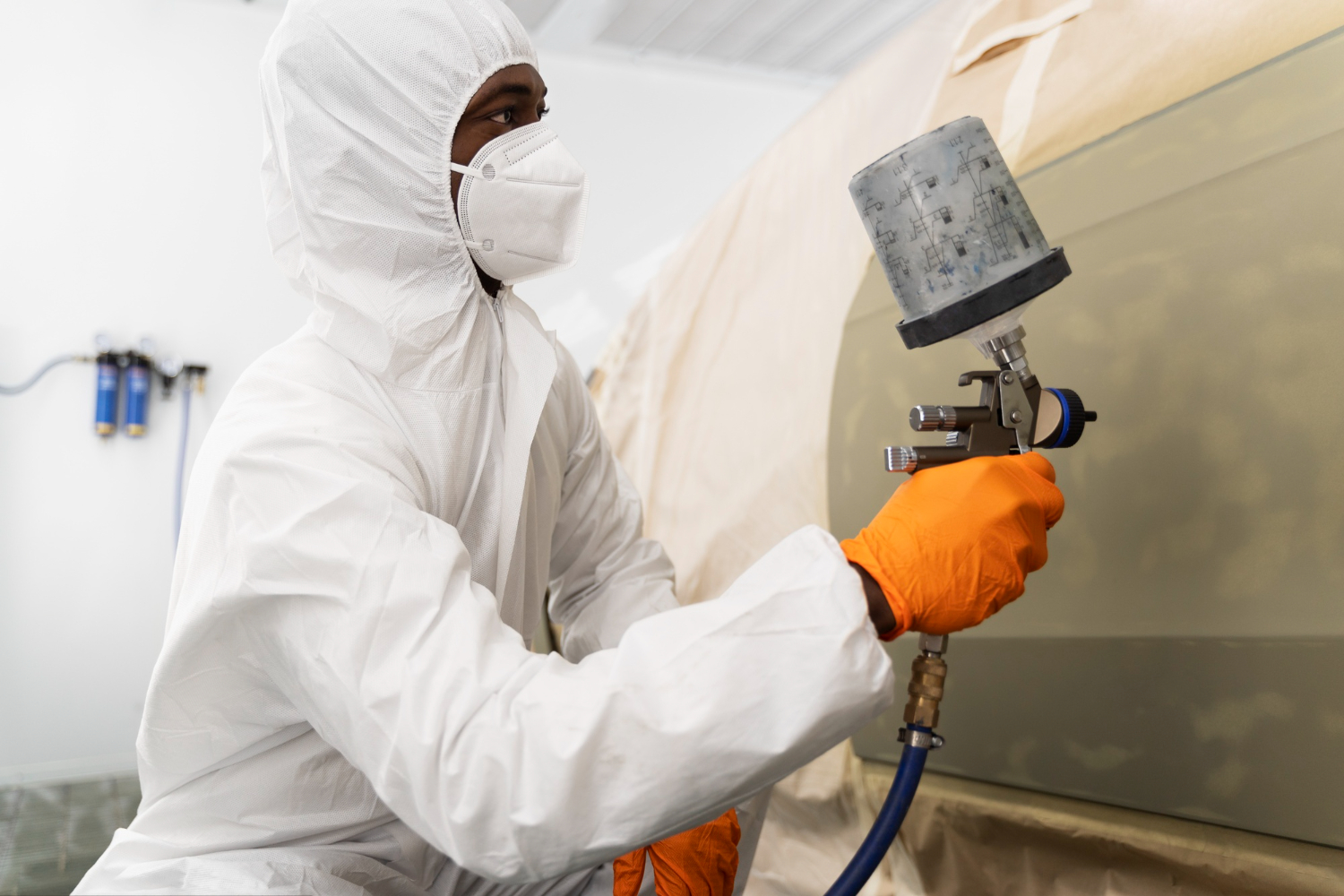
Unlike ordinary paint, protective coatings are rarely applied as a single layer. Instead, they are installed as a complete coating system, with each layer performing a specific function.
A typical protective coating system may include:
- Primer to promote adhesion and provide corrosion protection.
- Intermediate coat to build film thickness and strengthen the protective barrier.
- Topcoat to provide UV resistance, weather protection, and a durable finish.
Each layer works together to create a long-lasting system capable of protecting the substrate from environmental damage.
This multi-layer approach is one of the reasons protective coatings typically outperform standard decorative paints in industrial applications.
Durability and Long-Term Performance
Another key difference is durability.
Ordinary paint generally performs well in environments with minimal physical wear, such as residential interiors or office spaces. However, in demanding environments, it may fade, peel, blister, or deteriorate much more quickly.
Protective coatings are specifically engineered for long-term performance. Many systems are designed to withstand years of exposure to moisture, sunlight, chemicals, and mechanical impact while maintaining their protective properties.
Although protective coatings often require a higher initial investment, they usually reduce maintenance frequency and help prevent costly repairs over the long term.
For businesses managing industrial facilities or marine assets, this can result in significant savings throughout the asset’s lifecycle.
Surface Preparation Matters
Even the highest-quality protective coating cannot perform properly without adequate surface preparation.
This is one of the biggest differences between protective coating applications and ordinary painting projects.
Decorative painting often requires only basic cleaning before application. Protective coating systems, however, typically involve more rigorous preparation methods such as surface cleaning, degreasing, mechanical preparation, abrasive blasting, moisture control, and surface profile inspection.
Proper preparation allows the coating to bond securely with the substrate, maximizing adhesion and long-term performance.
In many cases, coating failures occur not because of poor product quality but because the surface was inadequately prepared before application.
Common Applications of Protective Coatings
Protective coatings are widely used across industries where durability and long-term asset protection are essential.
Some of the most common applications include steel structures, warehouses, industrial plants, manufacturing facilities, factory floors, marine vessels, shipyards, offshore structures, water treatment plants, parking buildings, and commercial buildings located near coastal environments.
Ordinary decorative paint, meanwhile, remains the ideal choice for homes, offices, retail spaces, hotels, and other environments where appearance is the primary consideration and exposure to harsh conditions is relatively limited.
How to Choose the Right Coating System
Choosing the right coating starts with understanding the environment in which the asset will operate.
Questions worth considering include:
- Is the structure located near the sea?
- Will it be exposed to chemicals or industrial pollutants?
- Will vehicles or heavy machinery regularly use the area?
- Is corrosion likely to become a long-term issue?
- How important is minimizing future maintenance?
The answers to these questions help determine whether a decorative paint system is sufficient or whether a high-performance protective coating is required.
Consulting a coating specialist during the planning stage can also help identify the most appropriate system, ensuring the coating performs as expected throughout its service life.
Protect Your Assets with the Right Coating Solution
Protective coatings are more than just paint, they are an investment in the longevity, safety, and reliability of valuable assets.
Whether you’re protecting a steel structure, factory floor, warehouse, parking facility, marine vessel, or coastal commercial building, choosing the appropriate coating system can significantly reduce maintenance costs and extend the service life of your investment.
As an Authorized Jotun Distributor in Bali, Elok Jaya Perkasa supplies genuine Jotun protective coating solutions supported by technical consultation. Our team works closely with contractors, facility owners, and industrial businesses to recommend coating systems that match the specific environmental conditions and performance requirements of every project.
Selecting the right coating from the beginning isn’t simply about achieving a better finish. It’s about ensuring long-term protection, reducing downtime, and protecting the assets your business depends on every day.